San Luis Obispo Neighborhoods for Your Lifestyle
June 4, 2026
June 4, 2026
Wondering how to choose the right neighborhood in San Luis Obispo? In a city this compact, that decision can shape your commute, daily routine, and even how often you walk, bike, or head for the trails. If you are trying to balance character, convenience, outdoor access, and budget, this guide will help you compare San Luis Obispo’s main neighborhood patterns with more clarity. Let’s dive in.
San Luis Obispo is small in size, but it does not live like one uniform market. The city’s population was estimated at 49,729 as of July 1, 2024, spread across 13.31 square miles, which means different pockets of town can feel quite distinct in daily life.
That matters even more because housing costs are high. The 2020 to 2024 Census estimate puts the median owner-occupied home value at $935,100 and median gross rent at $1,965, so choosing the right area is not just about preference. It is about making sure your location supports the way you actually want to live.
A smart neighborhood search usually begins with your habits, not just the home itself. San Luis Obispo’s mean travel time to work is 16.1 minutes, which is relatively short, but your experience can still vary depending on whether you want easier downtown access, proximity to Cal Poly, trail connections, or a more edge-of-town setting.
The city supports a more multimodal lifestyle than many California communities of similar size. Downtown is known for walkability, San Luis Obispo maintains more than 230 miles of sidewalks and multi-use paths, the bicycle network exceeds 60 miles, and SLO Transit provides daily fixed-route service throughout the city and to Cal Poly.
If your ideal day includes walking to errands, biking across town, or having transit as an option, your best fit may look very different from someone who wants newer housing or a less urban setting. That is why neighborhood choice in SLO is often about trade-offs, not simple rankings.
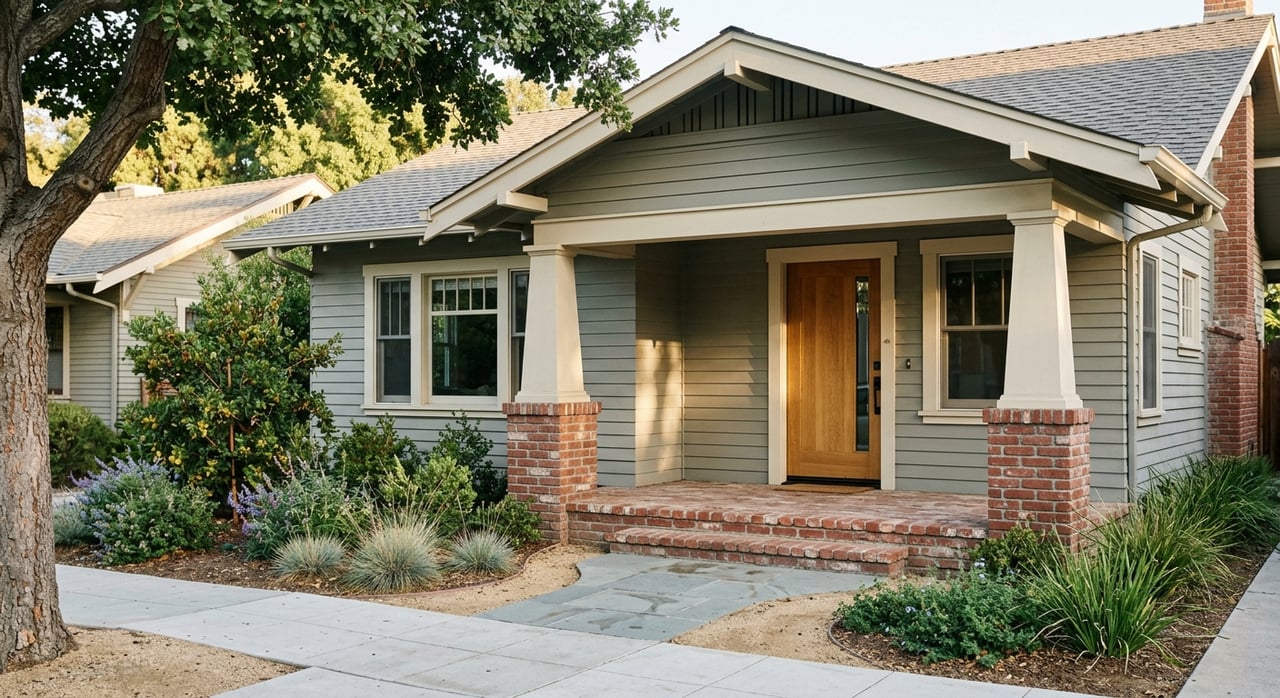
If you are drawn to older homes and a classic San Luis Obispo feel, the historic core deserves close attention. This part of the city offers the strongest concentration of older housing, architectural variety, and access to downtown.
The Downtown Historic District is the oldest part of the city and includes one of San Luis Obispo’s highest concentrations of historic sites and structures. Old Town is also recognized by the city as a turn-of-the-century residential area, which makes it a strong option if you value established character and central location.
For many buyers, the appeal here is simple. You are choosing an area where the setting itself carries a sense of place, and where being close to downtown can support a more walkable lifestyle.
The Mill Street District stands out for architectural variety. The city identifies early 20th-century styles here including Tudor Revival, Craftsman, Mission Revival, Prairie Colonial Revival, and Shingle.
If your search includes design detail, mature neighborhood character, and homes that feel distinct rather than standardized, Mill Street is one of the clearest places to look. It is especially helpful for buyers who want charm and are comfortable with the realities that can come with older properties.
South Broad and the Railroad District offer a slightly different version of older SLO. These areas combine historic roots with ongoing revitalization, making them appealing if you want character but are also open to mixed-use surroundings and neighborhood change over time.
The South Broad Street Area includes a mix of historic dwellings, manufacturing, commercial uses, and residential revitalization. The Railroad Historic District follows the historic rail yard and is well connected to downtown and Cal Poly by the Railroad Bike Path and Morro Street Bike Boulevard.
Historic neighborhoods can offer some of the most memorable homes in SLO, but they may also come with more constraints. The City’s Historic Preservation Ordinance governs alterations to historic resources, which can affect renovation plans, exterior changes, and design decisions.
There may also be benefits for qualifying properties. The Mills Act can reduce property taxes for eligible historic homes in exchange for continued upkeep. In practice, that means these neighborhoods may be especially appealing if you value long-term character and are prepared for a more careful approach to improvements.
If you prefer newer development patterns, more defined planning, or housing in areas still taking shape, San Luis Obispo has several growth pockets worth comparing. These neighborhoods tend to offer a different lifestyle from the historic core.
The Orcutt Area sits on the southwestern edge of the city at the base of Righetti Hill. It is planned for up to 979 homes with a variety of housing types, parks, bicycle and pedestrian paths, and open-space protection.
This area is especially notable for outdoor access. The city says the Orcutt Area and Righetti Ranch neighborhood has a comprehensive park system underway, and the Righetti Hill trailhead opened in May 2025 with two trails now described as a 0.6-mile summit route and a 0.7-mile hiking and biking route.
If you want a neighborhood with a more recent planning framework and direct access to open space, this area is a strong candidate. It may be especially appealing if trail use is part of your regular routine.
The Margarita Area is another major growth pocket. It is bounded by South Higuera Street, Broad Street, Tank Farm Road, and the South Hills ridge, and the city envisions it primarily for residential development along with 68 acres for business park and live-work uses.
City materials describe proposals here that include mainly single-family homes, open space, and pedestrian-network improvements, with community goals calling for up to 809 homes in a range of housing types. For buyers comparing newer sections of town, Margarita is worth watching for its mix of housing and planned connectivity.
These areas are useful because they highlight different forms of growth. Foothill is less of a traditional neighborhood and more of a commercial and redevelopment corridor, but it stands out for convenient access to Highway 1, Highway 101, downtown, and Cal Poly.
Edna-Islay is a 446-acre southeastern area planned for residential and limited commercial development. Mid-Higuera sits right next to the downtown core and is positioned for mixed-use reuse with better circulation, bicycle access, transit stops, and city parks.
If your priority is convenience, access, or being near evolving mixed-use areas, these districts may be more relevant than a purely residential neighborhood search.
In San Luis Obispo, outdoor access is not just a bonus. It can be a major lifestyle factor that changes how a neighborhood feels from one part of town to another.
The city’s open-space trail system covers 7,000 acres and includes destinations such as Cerro San Luis, Bishop Peak, Johnson Ranch, Irish Hills, Laguna Lake, Islay Hill, Reservoir Canyon, South Hills, Miossi, Terrace Hill, Stenner Springs, and Righetti Hill. The park system also includes 23 parks and about 106 acres of parkland.
This is why two homes with similar square footage can feel very different in practical terms. If one gives you easier access to Laguna Lake, South Hills, or Righetti Hill, your daily lifestyle may look very different than it would in a more central or more vehicle-oriented pocket.
When you are narrowing your search, it helps to group neighborhoods by lifestyle rather than trying to rank them from best to worst. In San Luis Obispo, the clearest comparison usually looks like this:
That last category is important if you want a less urban feel. The Madonna Area plan includes walking paths, pocket parks, trails, and a requirement that 50% of the area remain agricultural open space, while Prefumo Creek Commons is described as undeveloped agricultural land at the edge of the city limits.
Before you commit to one part of San Luis Obispo, it helps to pressure-test your priorities. A neighborhood that looks right on paper may not be the best fit once you compare daily logistics and long-term goals.
Ask yourself:
These questions help you move beyond broad labels. In a market as nuanced as SLO, the right neighborhood is usually the one that best matches how you want to live, not the one with the loudest reputation.
Choosing a neighborhood in San Luis Obispo is really about aligning place with lifestyle. Because the city is compact, relatively walkable, and shaped by a mix of historic districts, planned growth areas, and open-space connections, small location differences can have a big impact on your day-to-day experience.
A thoughtful search can help you avoid overpaying for the wrong fit and focus instead on the areas that support your priorities. If you want calm, strategic guidance as you compare San Luis Obispo neighborhoods and homes along the Central Coast, Leslie Dougherty is here to help.
Stay up to date on the latest real estate trends.

Interior Design, Mid Century, Buyers, Outdated
When does “outdated” simply mean “of its era”?

Over 20 years of experience guide a strategic, thoughtful approach grounded in deep market insight. Every step is handled with clarity, precision, and a strong focus on your goals.