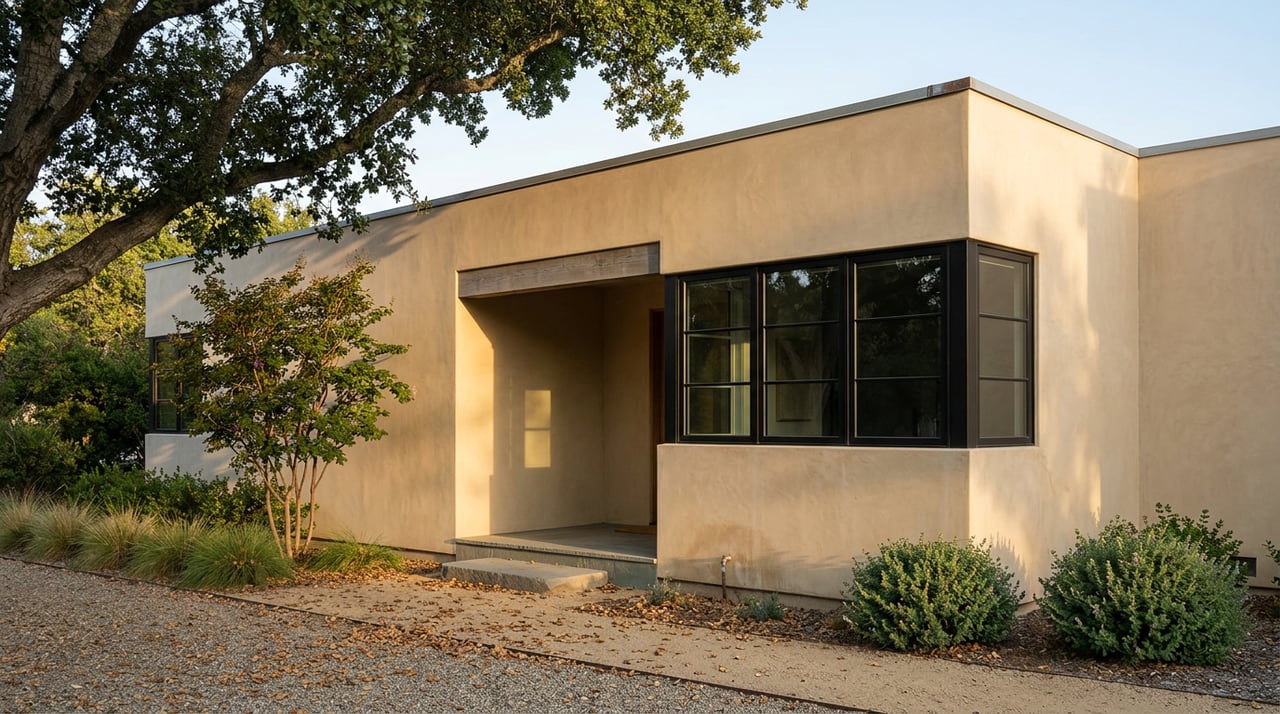
San Luis Obispo's Student Rental Math Has a New Landlord, and It's Cal Poly
September 17, 2026
September 17, 2026
The number that draws investors to the blocks north of Foothill Boulevard is simple enough to repeat from memory: four-bedroom houses within walking distance of Cal Poly are renting for $5,681 a month or more, among the highest-yielding residential rentals anywhere in San Luis Obispo County. For a buyer comparing Central Coast towns, that number reads like a formula. Buy near campus, rent to students, collect a premium indefinitely.
The formula assumes the pool of student renters holds steady. It won't, at least not in its current shape. Cal Poly is partway through a $1 billion, ten-year building program that adds thousands of new beds directly on campus, and this fall it extended a mandatory two-year residency requirement to every incoming class rather than a handful of majors. The same academic term that requires more students to stay on campus is also the first semester Cal Poly has ever run, after converting from a quarter calendar that shaped how off-campus leases turned over for decades. None of that shows up in a rent comparison. All of it shows up in a ten-year hold.
Two pieces of friction sit underneath that $5,681 figure, and both are easy to miss if you're only looking at what a unit rents for today.
The first is regulatory. San Luis Obispo effectively prohibits traditional short-term rentals in residential zones. Only owner-occupied homestays, capped at four adult guests, are permitted. That closes off the usual fallback for an owner near campus who wants to shift a property into vacation-rental income if the long-term student market softens. Whatever the plan is for a near-campus purchase, it has to work as a long-term rental, because the short-term exit isn't available.
The second is calendar-driven, and it's new this year. Under the old quarter system, Cal Poly ran three terms, fall, winter, and spring, which meant three natural points in the year when leases could turn over, transfer students could arrive, and vacancies could fill without sitting empty for months. Beginning with the 2026-27 academic year, the university moved to a semester calendar with students moving in during August and out in May, a single annual block instead of three staggered ones. For an off-campus landlord, that collapses the leasing calendar into one window. Miss it, and a vacancy has a much longer runway before the next natural turnover point arrives.
The bigger shift is structural, not seasonal. Cal Poly launched a Future Housing Plan in the summer of 2024, a ten-year, roughly $1 billion effort the university describes as the largest housing investment in its history. The plan adds an estimated 3,500 to 4,000 new beds through a mix of new construction and renovated halls, with an explicit goal: making it possible for every second-year student to live on campus, not just a subset.
The first new building under that plan, łktoʔ, adds housing for just over 500 students. A second building is scheduled to open in 2027 with space for roughly 700 more, and the university has been direct about why: it's expanding the two-year housing program to all second-year students, not only those in specific colleges or majors.
That expansion arrived on schedule this fall. Starting with students admitted for the 2026-27 academic year, Cal Poly's two-year, on-campus residency requirement now applies across every college, where previously it was limited to select programs. Practically, that means a growing share of the sophomores who used to sign off-campus leases the moment they turned 19 no longer have that as a first option. Every year the housing plan adds another building, that share grows. This is not a market cooling on its own. It's a landlord, the university itself, absorbing tenants who used to be the off-campus market's most reliable customers.
Not every San Luis Obispo neighborhood carries this exposure the same way. The city's sub-markets differ enough in price and character that treating "San Luis Obispo" as a single market obscures more than it reveals.
| Area | Typical price range | What anchors the value |
|---|---|---|
| Cal Poly-adjacent corridor (Foothill Blvd to California Blvd) | $750,000–$1.1M | Student rental income; highest yield, most exposed to campus housing changes |
| Downtown / Old Town | $900,000–$1.5M+ | Walkable, historic character; owner-occupant demand |
| Bishop Peak / Foothill corridor | $950,000–$1.4M | Trail access, quieter residential feel |
| Broad Street / Johnson Avenue | $850,000–$1.2M | Long-term owner-occupants, established family neighborhood |
| Laguna Lake / Madonna Road | $800,000–$1.1M | Most accessible ownership price point in the city |
The Cal Poly-adjacent corridor is the only one of these five priced primarily on its ability to capture student tenants. The other four are anchored in owner-occupancy, whether that's a family staying for decades on Broad Street, a retiree drawn to trail access near Bishop Peak, or a buyer choosing Laguna Lake for the lowest entry point into SLO ownership. None of those neighborhoods depend on the same demand pool Cal Poly is quietly reshaping, which means the housing plan's effect on them is close to zero.
There's a second supply story unfolding at the same time, and it has nothing to do with the university. The Airport Area Specific Plan opened roughly 1,500 acres adjacent to the San Luis Obispo airport to residential development, described locally as the most significant new housing opportunity the city has seen in a generation.
This is a separate track from Cal Poly's dorm construction, but it matters to the same buyer weighing a near-campus purchase. If new construction in the airport area comes online over the next several years, it adds another category of inventory, newer, likely priced differently, competing for the same renters and buyers currently drawn to the tighter, older housing stock closer to campus. A buyer underwriting a long hold near Cal Poly should treat this as a second variable alongside the university's own building program, not a separate conversation.
As of July 2026, San Luis Obispo's median sale price sat at $979,000 over the trailing three months, up 2.6% from the same period a year earlier, with 156 homes sold that month compared to 127 the year before. That's a market with more transactions closing, not fewer, which tells you demand across the city broadly remains healthy. It says nothing about which pocket of that demand is stable and which is shifting underneath a buyer's feet.
For a buyer whose plan already centers on owner-occupancy, in Broad Street/Johnson Avenue or Laguna Lake/Madonna Road, none of the Cal Poly housing story changes the underlying calculation. Their value was never built on capturing a student tenant, so it isn't exposed to a change in how many students need one.
For an investor specifically weighing a near-campus purchase against a comparable property somewhere else on the Central Coast, the honest question isn't whether a unit rents for $5,681 today. It's whether it still commands that number once Cal Poly has delivered another 3,000-plus beds and the current incoming class, the first fully subject to the two-year requirement, has worked its way through the system. That's a five-to-ten-year question, and it deserves a five-to-ten-year answer, not a snapshot of this month's listings.
Does this mean student rentals near Cal Poly are a bad investment? Not necessarily. The market has existed for decades and off-campus housing will remain part of it. What's changing is the ratio of on-campus to off-campus beds, which shifts negotiating leverage between landlords and tenants over time rather than eliminating the market outright.
When would an investor actually start to feel this? The two-year residency requirement took effect with students entering this fall, so its full effect on off-campus leasing builds gradually as each new sophomore class stays on campus instead of moving off it, compounding as Cal Poly delivers more beds through the life of its ten-year plan.
Are there San Luis Obispo neighborhoods where none of this applies? Yes. Neighborhoods priced around owner-occupancy, like Broad Street/Johnson Avenue or Laguna Lake/Madonna Road, were never valued on their ability to capture student tenants, so Cal Poly's housing decisions don't touch their fundamentals the way they touch the Foothill Boulevard corridor.
If you're weighing a purchase in San Luis Obispo against another Central Coast option, or trying to understand what a specific block's rent roll will actually look like in five years, that's the kind of question worth working through before you write an offer, not after. Leslie Dougherty has spent two decades reading exactly this kind of local detail into client decisions across the Central Coast. Let's Connect.
Stay up to date on the latest real estate trends.

Interior Design, Mid Century, Buyers, Outdated
When does “outdated” simply mean “of its era”?

Over 20 years of experience guide a strategic, thoughtful approach grounded in deep market insight. Every step is handled with clarity, precision, and a strong focus on your goals.