Are We Too Quick to Call a House Outdated?
Interior Design, Mid Century, Buyers, Outdated Leslie Dougherty September 8, 2026
Interior Design, Mid Century, Buyers, Outdated Leslie Dougherty September 8, 2026
Walk into an older home with buyers and it usually doesn’t take long before someone starts making a mental list: change the flooring, paint the paneling, redo the fireplace, replace the tile.
Sometimes those updates make perfect sense. But lately I’ve been wondering whether we are a little too quick to call a home outdated simply because its finishes belong to another era.
I think about a classic 1950s ranch home I once owned in Sacramento, built by Randy Parks during the postwar housing boom. It had pink bathroom tile, a turquoise cooktop, tan tile, original wood floors, and grooved wood paneling surrounding a red brick fireplace with built-in bookshelves. Those details were very much part of the home’s postwar character.
After I sold it, the new owner gutted the interior and nearly all of those original features disappeared. I remember thinking at the time, “Wait — you just stripped that home of all its character.”
Some of those finishes may have looked dated then, but they also told the story of when the home was built. And that is really what has me thinking now: when does “outdated” simply mean “of its era”?
We have seen this happen again and again in design. Many 1960s homes that were once dismissed as old-fashioned are now appreciated for their Mid-Century design and character. Natural wood, colorful tile, terrazzo, brass, wallpaper, built-ins, architectural curves and other features that were once routinely removed have all found their way back into current design.
Even floor plans have come full circle. For years, nearly every remodel seemed to begin with, “Can we open up this wall?” Today, there is renewed appreciation for defined spaces, separate dining rooms, prep kitchens and rooms that can actually be closed off.
Design trends have a way of returning.
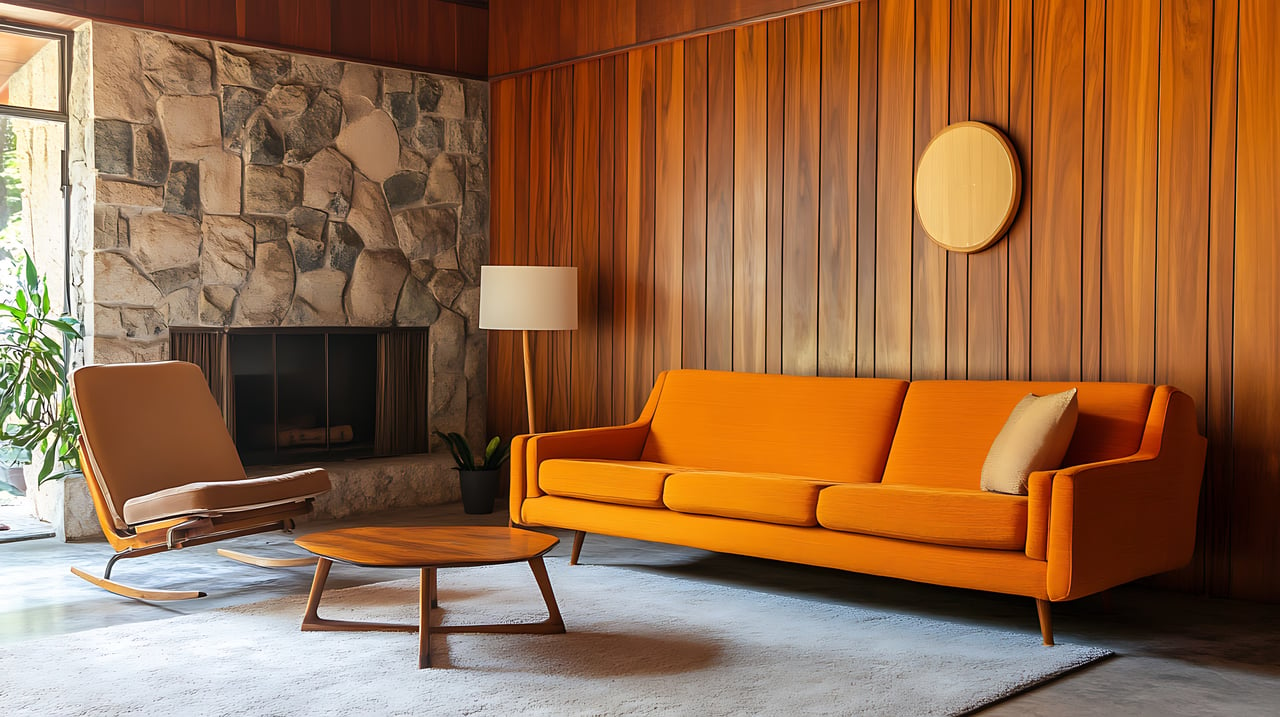
Look at the room pictured here. There was likely a time when someone would have walked in and immediately wanted to remove the wood paneling, replace the fireplace, change the flooring and neutralize everything.
Today, many buyers might see the same room differently: warmth, craftsmanship, texture and architectural character.
That does not mean every older feature should be preserved.
There is an important difference between dated and deteriorated. A failing roof, unsafe electrical system or damaged finishes may legitimately need to be replaced. And some renovations simply make a home function better for the way we live today.
But something can be old without being bad.
The better question may be whether a feature is truly obsolete — or simply out of fashion at the moment.
That distinction matters because when we remodel a home, we often make permanent decisions based on temporary trends. Gray flooring, white kitchens and cool neutral palettes dominated design for years. Now warmer woods, color and natural materials are returning.
What feels current today will eventually become someone else’s “dated.”
Older homes, especially those with original details still intact, often have features that would be difficult or expensive to recreate today: woodwork, fireplaces, built-ins, unusual windows, handcrafted finishes and architectural quirks that give a home personality.
Sometimes those features need updating. Sometimes they simply need to be seen differently.
So perhaps the better question when we walk into an older home isn’t:
“How quickly can we update this?”
Maybe it is:
“What here is worth keeping?”
Stay up to date on the latest real estate trends.
Interior Design, Mid Century, Buyers, Outdated
When does “outdated” simply mean “of its era”?
Over 20 years of experience guide a strategic, thoughtful approach grounded in deep market insight. Every step is handled with clarity, precision, and a strong focus on your goals.