Nipomo Acreage Property Guide for Small-Land Buyers
July 2, 2026
July 2, 2026
Dreaming about a little more land in Nipomo? A small-acreage or lifestyle property can offer room to breathe, space for animals or gardens, and a slower pace that appeals to many Central Coast buyers. The key is that in Nipomo, acreage alone does not tell the whole story. If you understand how zoning, water, septic, and access shape a parcel’s real-world use, you can make a much more confident decision. Let’s dive in.
Nipomo is not a one-size-fits-all acreage market. The area includes everything from smaller residential lots to 2.5-acre suburban parcels, 5-acre rural sites, and larger agricultural holdings. That variety is part of the appeal, but it also means two properties with similar acreage can have very different uses and long-term value.
San Luis Obispo County ties residential density to land-use category, planning area standards, water availability, and onsite wastewater systems. In other words, what you can do with a parcel depends on more than the size shown in a listing. Because the Nipomo Community Plan is also under active update through 2026, current map and code review matters.
The Nipomo Community Plan describes several residential patterns. These include low-density areas with 20,000-square-foot lots, a 10,000-square-foot density area that changes after community sewer service becomes available, and Residential Suburban areas that allow one dwelling per 2.5 acres with individual well and septic or one acre with community water.
That means a property marketed as “small acreage” may sit in a very different planning context than another parcel with a similar look. Some one-acre concentrations are served by private community water or the Nipomo Community Services District, while larger parcels outside district boundaries may rely on wells and septic systems.
Nipomo also includes Residential Rural areas with five-acre density. Beyond that, larger agricultural land follows a different set of subdivision standards. For new agricultural parcel creation, County rules generally start at 40 acres for irrigated crop production, including wine grapes, with some 20-acre exceptions if specific criteria are met.
That is an important reality check if you are hoping to buy a smaller parcel and later split it for agricultural use. In Nipomo, truly small agricultural splits are generally uncommon under County standards.
One of the most important steps is confirming the parcel’s land-use category and zoning standards. The County recommends a practical review process: determine whether the parcel is inland or coastal, confirm the land-use designation on the map, review allowable uses and standards, then check planning area rules, combining designations, and recorded map notes.
This is where many buyers discover the difference between what a property seems suited for and what the County will actually allow. A parcel may look perfect for expansion, horses, or a small agricultural use, but the answer depends on the recorded details tied to that APN.
In Nipomo, water is one of the first questions to ask. If a parcel has Nipomo Community Services District service, the district offers a verification form for water or sewer service by APN. That can help you confirm whether service is available and how the property is currently set up.
If the parcel relies on a private well, the County notes that private wells are not regulated or monitored by an outside agency. The owner is responsible for making sure the water is safe, and laboratory testing can identify issues such as bacteria, nitrates, metals, radon, and other contaminants. For many acreage buyers, this is not a deal breaker, but it is something to evaluate carefully.
Septic is just as important as water. San Luis Obispo County’s Local Agency Management Program sets minimum standards for onsite wastewater systems and supports local flexibility, but buyers still need to understand how the system affects current use and future plans.
The County encourages pumping and inspection every 3 to 5 years. If you want to add to or modify a structure served by septic, the County requires an Existing Septic Verification form and a plot plan. That means expansion plans should be checked early, not after closing.
Lifestyle properties often reward careful due diligence. Before you move forward, these are some of the most useful questions to ask:
The County specifically advises buyers to speak with Planning staff using the APN and a site plan. Some projects may need a land-use permit before a building permit, so it helps to understand the process before you commit.
Horse keeping in Nipomo is highly dependent on parcel size and zoning. County guidance shows that horses are not allowed in RMF, are limited to 1 per acre in RSF, 3 per acre in RS and RR, and 4 per acre on RR sites larger than 5 acres.
For larger sites, the rules change again. The County code says keeping fewer than 30 horses in Agriculture or Rural Lands on sites of 20 acres or larger requires no permit, while 30 or more horses, along with uses such as boarding stables, riding schools, academies, and horse exhibition facilities, are treated as specialized animal facilities.
If horses are part of your vision, it is wise to confirm both the base zoning and whether any related improvements would trigger grading or other permits. The County’s agricultural grading guide also notes that equestrian facilities require a County grading permit.
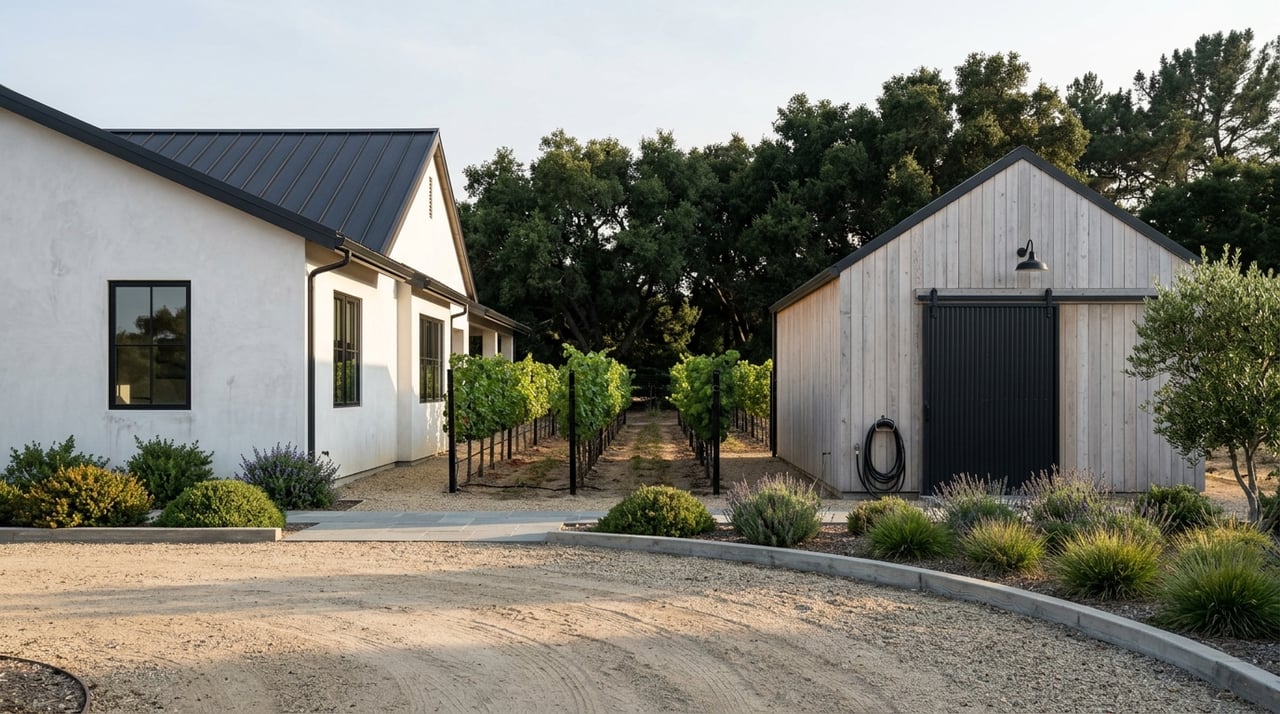
A small vineyard can sound like the perfect lifestyle upgrade, but it should be approached with care. County standards for agricultural subdivision explicitly include wine grapes in parcel-size testing, which shows how closely agricultural use is tied to land rules.
For a buyer, the practical takeaway is simple: a hobby vineyard may be more realistic as a use on an existing legal parcel than as a reason to expect a new small agricultural split. You will want to check zoning, water supply, septic capacity, and whether the parcel falls within an agricultural preserve or another restricted area.
A beautiful parcel is only as usable as its access and site conditions allow. New roads serving structures generally require grading permits, according to the County’s agricultural grading guide. That can affect project cost, timeline, and how straightforward future improvements will be.
Within Nipomo’s urban area, community standards add another layer. New parcels within the urban services line must generally be designed for future sewer connection, except for mapped low-density areas, and some projects may also require drainage-plan approval.
Fire safety is another piece of the puzzle. California fire guidance classifies areas by Fire Hazard Severity Zone as Moderate, High, or Very High, and emphasizes defensible space and home hardening as key safety steps. For acreage buyers, that can influence both maintenance planning and the overall comfort level with a property.
In Nipomo, value is often driven less by raw size and more by clarity. Parcels with well-documented water service or well information, known septic capacity, usable access, clear zoning, and manageable grading or fire considerations are generally easier to evaluate.
That same clarity can support resale later. Buyers tend to feel more confident when a parcel’s allowable uses, service conditions, and site limitations are easier to understand.
On the other hand, properties that depend on private wells, individual septic systems, drainage remedies, or more intensive animal or agricultural permitting may appeal to a narrower buyer pool. That does not make them less desirable. It simply means the right buyer is often someone who values privacy, outdoor space, and rural flexibility enough to accept a more detailed review process.
If you are searching for small acreage in Nipomo, it helps to think beyond the listing photos and lot size. Focus on how the parcel actually functions today, what it may support in the future, and how much certainty comes with that potential.
A calm, step-by-step review usually leads to better decisions. When you verify APN details, land-use category, water source, septic status, access, and any permit questions early, you can move forward with much more confidence and far fewer surprises.
Nipomo offers real lifestyle appeal, from manageable acreage to more rural holdings, but the best purchase is usually the one that matches your goals and stands up well to practical review. If you want thoughtful guidance as you evaluate land, rural homes, or lifestyle properties on the Central Coast, connect with Leslie Dougherty.
Stay up to date on the latest real estate trends.


Interior Design, Mid Century, Buyers, Outdated
When does “outdated” simply mean “of its era”?
Over 20 years of experience guide a strategic, thoughtful approach grounded in deep market insight. Every step is handled with clarity, precision, and a strong focus on your goals.